

Florida Property Tax Reform: What It Could Mean for the Tampa Bay Housing Market
The Florida Legislature is advancing a major property tax proposal that could significantly reshape the Tampa Bay real estate market. If approved by voters in November 2026, the initiative could affect home prices, buyer demand, and long-term homeownership costs across Tampa, St. Petersburg, Clearwater, and surrounding communities.
For buyers, sellers, and homeowners in the Tampa Bay area, understanding these potential changes is essential. In this article, we break down how the proposed Florida property tax law could impact home sales, property values, and homeowner tax bills across the region.
What Is the Proposed Property Tax Law in Florida?
Under current plans, the Florida Legislature may place a constitutional amendment on the 2026 ballot that would gradually phase out non-school property taxes on homesteaded primary residences. If approved by voters, this change could take effect as early as January 1, 2027, potentially reducing tax bills for many homeowners in Hillsborough, Pinellas, and Pasco counties.
Non-school property taxes currently fund essential city and county services such as police, fire rescue, EMS, parks, and infrastructure — all services that are critical in fast-growing areas like Tampa’s Westshore District, Downtown St. Petersburg, and Clearwater Beach.
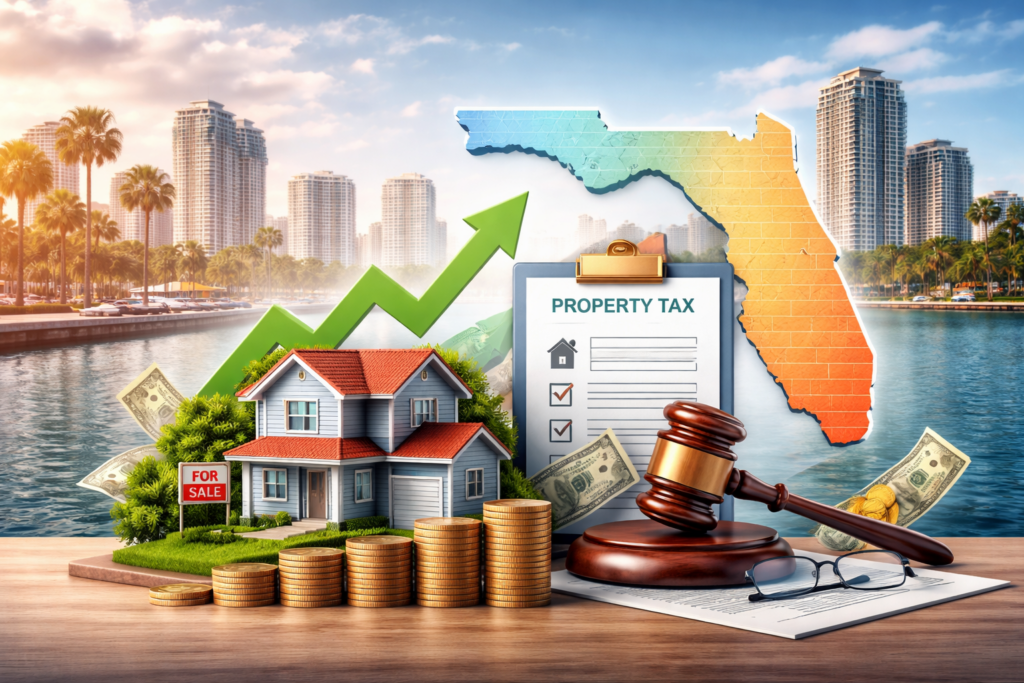
How the Proposed Property Tax Law Could Impact Tampa Bay Home Sales
1. Potential Increase in Buyer Demand
Lower property taxes could significantly boost buyer demand in the Tampa Bay area. With property tax bills potentially shrinking for primary homeowners, the overall cost of owning a home in Tampa, St. Pete, or Clearwater could become more attractive compared to markets with higher tax burdens.
Buyers relocating from states such as California, New York, or Illinois — all with historically higher property taxes — may find Tampa Bay’s cost advantages even more appealing if the proposed tax relief passes. Increased demand could lead to more competitive offers and stronger market activity.
2. Possible Home Price Appreciation
Ironically, reduced property taxes could contribute to higher home prices across the Tampa Bay region. When buyers anticipate decades of lower recurring tax costs, they may be willing to pay a premium for homes in the area.
This “value shift” could place upward pressure on prices, particularly in high-demand neighborhoods such as:
- Hyde Park (Tampa)
- Coquina Key (St. Petersburg)
- Harbor Oaks (Clearwater)
- Carrollwood (North Tampa)
In markets where inventory is already limited — such as South Tampa and Old Northeast St. Pete — this additional demand could accelerate appreciation.
3. Market Timing Uncertainty
Leading up to the November 2026 property tax vote, some buyers and sellers may adopt a “wait-and-see” mindset.
Potential homebuyers might delay purchasing until after the results are finalized, hoping for clearer financial projections. Similarly, Tampa Bay homeowners considering selling — especially those in Trinity, Lutz, or Dunedin — may hold off to see how tax changes affect market dynamics.
This temporary hesitation could slow sales velocity in late 2026, even as buyer interest remains high.
How Tampa Bay Homeowners Could Benefit From Property Tax Changes
1. Lower Annual Property Tax Bills
For current homeowners in Tampa Bay, reduced non-school property taxes could mean significantly lower annual expenses.
This benefit would be especially meaningful for:
- Retirees on fixed incomes in Clearwater Beach or Safety Harbor
- First-time homeowners in Brandon or Riverview
- Long-term residents of St. Pete’s Historic Old Northeast
Lower tax bills could improve household budgets, freeing up money for home improvements, savings, or other local spending.
2. Increased Home Equity Through Appreciation
As home prices rise — driven by increased demand and more attractive ownership costs — Tampa Bay homeowners could see meaningful equity growth.
Strong equity growth supports long-term financial stability and provides more opportunities for resale, refinancing, or downsizing later in life.
Neighborhoods with strong school zones, walkable amenities, or proximity to Tampa Bay’s waterfronts are particularly well positioned for long-term value appreciation.
Potential Risks of Florida Property Tax Reform for Tampa Bay
While property tax relief offers clear financial benefits, there are also potential challenges Tampa Bay residents should consider.
Funding for Local Services
Non-school property taxes currently fund many vital community services, including:
- Police and fire rescue services in Tampa
- Parks and recreation throughout Pinellas County
- Road maintenance in Pasco County
- Libraries and community centers across the region
Reduced tax revenue could place strain on municipal budgets unless new funding sources are identified.
Possible Shift Toward Alternative Fees or Taxes
To offset lost revenue, local governments may introduce alternative taxes, assessments, or service fees. Homeowners could see new charges for services such as stormwater management, utilities, or special district assessments.
These changes could partially offset property tax savings and influence how communities fund public services in the future.
What This Means for Tampa Bay Buyers and Sellers
While the final outcome of the proposed tax law will not be known until the November 2026 vote, the Tampa Bay housing market is likely to respond quickly to any major tax changes.
For buyers, lower long-term tax costs could make homeownership in Tampa Bay even more attractive compared to other major metropolitan areas.
For sellers, increased demand could strengthen property values and shorten time on market in desirable neighborhoods.
Working with a knowledgeable local real estate professional can help buyers and sellers navigate these potential market shifts and make informed decisions.
Final Thoughts
The proposed property tax reform in Florida could represent one of the most significant changes to the Tampa Bay real estate market in decades. For buyers, sellers, and homeowners in Tampa, St. Petersburg, Clearwater, and surrounding communities, the outcome of the 2026 vote could influence market trends, property values, and long-term tax obligations.
Staying informed and working with a local real estate expert can help you make confident decisions as the Tampa Bay housing market continues to evolve.
Curious how the proposed property tax changes could affect your home value or selling timeline?
A local Tampa Bay real estate expert can help you understand how these potential changes may impact your neighborhood and your property’s value.